The Stasi Poetry Circle. The Creative Writing Class that Tried to Win the Cold War

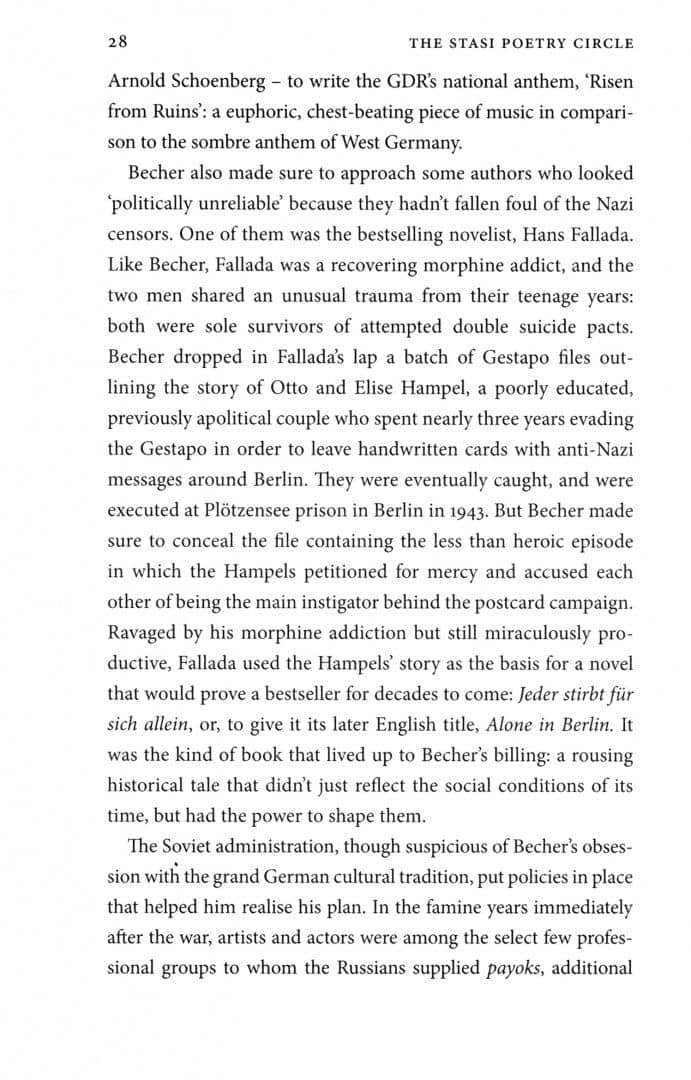
In 1982, East Germany's fearsome secret police - convinced that writers were embedding subversive messages in their work - decided to train their own writers, weaponising poetry in the struggle against the class enemy. Once a month, a group of soldiers and border guards gathered in a heavily guarded military compound in East Berlin for meetings to learn how to write lyrical verse. Journalist Philip Oltermann spent five years rifling through Stasi files, digging out lost volumes of poetry and tracking down surviving members of this Red poet's society, to illustrate the little known story in which spies turned poets and poets spies.
Перейти к описанию и характеристикам| Издательство | Faber and Faber |
| Год издания | 2023 |
| Страниц | 224 |
| Язык | Английский |
| ISBN | 978-0-571-33120-8 |
Отзывы
Описание и характеристики
In 1982, East Germany's fearsome secret police - convinced that writers were embedding subversive messages in their work - decided to train their own writers, weaponising poetry in the struggle against the class enemy. Once a month, a group of soldiers and border guards gathered in a heavily guarded military compound in East Berlin for meetings to learn how to write lyrical verse. Journalist Philip Oltermann spent five years rifling through Stasi files, digging out lost volumes of poetry and tracking down surviving members of this Red poet's society, to illustrate the little known story in which spies turned poets and poets spies.
| Издательство | Faber and Faber |
| Год издания | 2023 |
| Страниц | 224 |
| Язык | Английский |
| ISBN | 978-0-571-33120-8 |
| Обложка | обл - мягкий переплет (крепление скрепкой или клеем) |
| Бумага | Офсет |
| Полиграфические особенности | Частичная лакировка |
| Иллюстрации | Без иллюстраций |
| Размеры | 130 × 200 × 15 mm |
| Вес, г | 186 |